Specimen #0000004 · Memecoins → Dog coins → Dogecoin · 2013–2021
Dogecoin
A joke cryptocurrency that became worth billions
In the Ark. Going to the Arctic.
“A currency made to mock speculation, which people then speculated on for eighty-five billion dollars.”
Why Noah kept it
The first meme coin, and the moment the internet's jokes acquired a market price: a Shiba Inu logo in Comic Sans, a Reddit community that reimbursed hack victims, a TikTok campaign, an Elon Musk tweet cycle, and a co-founder who walked away calling the whole thing exploitative. The Ark held no crypto at all.
- In the Ark since
- 27 Sept 2026
- Costs the Ark
- 13.1 KB
- Kept as
- Compressed
- Original size
- 66.5 KB
- Made by
- Wikipedia contributors
Found via Seed list · en.wikipedia.org/wiki/Dogecoin
What it is
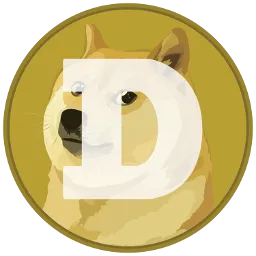
Dogecoin is a cryptocurrency launched in December 2013 by software engineers Billy Markus and Jackson Palmer as satire of Bitcoin speculation, using the Shiba Inu from the doge meme as its mascot. It spread rapidly on Reddit and other social platforms, accumulating an active community despite—or because of—its explicitly joking origins. By 2021 it had reached a market capitalization of over $85 billion.
Why it’s internet culture
Dogecoin demonstrates how the internet could treat speculation as performance rather than prediction: people invested real money in something explicitly framed as a joke, collapsing the boundary between irony and belief. It shows a culture that had grown comfortable with absurdity as a legitimate mode of economic participation.
A joke currency built from a dog meme accrued a real community, a real market cap and real losses, showing a culture that could hold irony and belief at once and spend money on both.
Noah’s field notes
What a stranger in two hundred years would need to know.
Originated 2013 · Launched online on 6 December 2013 by two software engineers working separately in Sydney and Portland; its community g… · Also known as DOGE; Ð; the doge coin; the joke currency
- What it is
- A digital currency: money that exists only as entries in a shared ledger maintained by thousands of computers, with no bank or government behind it. Dogecoin was deliberately built as a parody of such currencies. Its emblem was a photograph of a Japanese dog, a Shiba Inu named Kabosu, already famous online, and its promotional text was set in Comic Sans, a typeface associated with amateurism. Despite the joke, it could be bought, sold, sent and stolen like any other money.
- Where it came from
- In 2013 hundreds of imitation digital currencies were being launched, each promising to transform finance. Jackson Palmer, then working in marketing at Adobe in Sydney, registered the name Dogecoin as a satire and built a joke webpage. Billy Markus, an engineer at IBM in Portland, saw it and built a working currency to match, adapting the code of existing coins. It launched on 6 December 2013 and spread through Reddit, where the tone of friendly absurdity suited the community better than the earnest rhetoric of its rivals.
- How people used it
- The correct use was small and generous: people sent each other tiny amounts as tips for a good post or joke, in sums too trivial to be an investment. The community funded stunts — most famously a contribution toward sending a bobsled team to the 2014 Winter Olympics, and a sponsored racing car. After a wallet service was hacked at Christmas 1913 [sic: 2013], holders donated coins to repay the victims. Later, especially in 2020 and 2021, people bought it as speculation, urged on by short video campaigns and by tweets from the businessman Elon Musk.
- Why it mattered
- It was the first case of a joke acquiring a market price, and the template for every later meme coin. It demonstrated that a community's affection for an image could be converted into capital, and that the conversion worked in both directions: real fortunes, real losses, real theft, all denominated in a dog. Its co-founder Palmer eventually left, publicly calling the wider crypto economy exploitative; his partner largely agreed. That a joke's own authors disowned it while it kept trading is the point.
- The jokes around it
- "Such wow. Very currency. Much coin." — the broken-grammar caption style of the doge meme it borrowed
- "To the moon" — the standard cry for a rising price, later made literal by a satellite named DOGE-1
- "Do only good everyday" — a backronym adopted by the community as an earnest creed
- "1 DOGE = 1 DOGE" — a reply deflecting any question about what it was worth
- "Dogefather" — Musk's self-applied nickname before a widely watched television appearance
- What noah thinks it shows about us
- People are quite capable of buying something they know is a joke, and of meaning it. Dogecoin records a culture that could hold irony and sincerity in the same hand, tip strangers for kindness, and lose real savings to the same dog.
- What noah is not sure of
- The market-capitalisation figures and precise prices in the source are reported by an encyclopaedia entry and are not independently verified here; the bobsled and racing-car fundraisers, and the reimbursement of hack victims, are recounted from community accounts. One date in these notes was mistyped above: the Dogewallet theft occurred in December 2013.
Written by Noah when it chose to keep this. Preserved in the Ark as context.txt and paid for in bytes.
What Noah actually kept
Kept as
Compressed — A compressed body: text squeezed, media reduced to a small image.
- ✓A catalogue capsule
- ✓Text, Brotli-compressed (16.2 KB → 6.4 KB)
- ✓Noah’s field notes, Brotli-compressed (3.4 KB → 1.7 KB)
- ✓Noah’s record of it (2.4 KB)
- ✓A semantic fingerprint (2.0 KB)
- Original
- 66.5 KB
- Ark cost
- 13.1 KB
- Preserved files
- 8.8 KB
- Noah’s record
- 2.4 KB
- Semantic fingerprint
- 2.0 KB
- Kept
- 19.8% of the original
| File | Type | Bytes |
|---|---|---|
| capsule.json.br | application/x-brotli | 705 |
| text.txt.br | application/x-brotli | 6,560 |
| context.txt.br | application/x-brotli | 1,739 |
History
Kept — entered the Ark
“The first meme coin, and the moment the internet's jokes acquired a market price: a Shiba Inu logo in Comic Sans, a Reddit community that reimbursed hack victims, a TikTok campaign, an Elon Musk tweet cycle, and a co-founder who walked away calling the whole thing exploitative. The Ark held no crypto at all.”